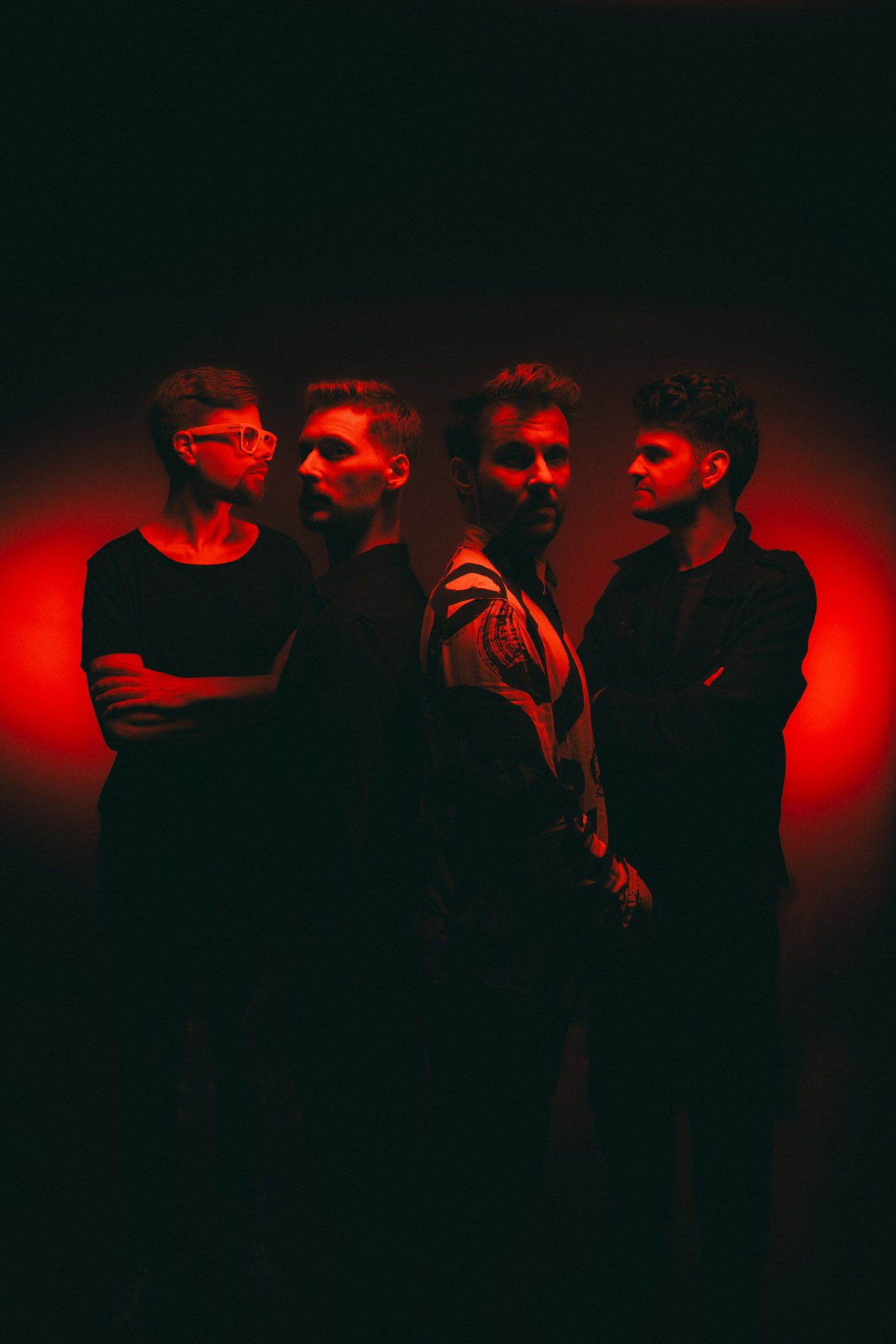
Vier Freunde aus Poznań, dieselbe Schule für Hochbegabte, dasselbe Konservatorium – und irgendwann: Tango. Bandonegro, 2010 gegründet, hat sich seither in die erste Reihe der europäischen Tango-Orchester gespielt: Salon Canning in Buenos Aires, Kammermusiksaal der Berliner Philharmonie, Filharmonia Opolska. Ihr Album Tanuevo (2025) entstand in Buenos Aires mit Pipi Piazzolla, dem Enkel von Astor. Am 30. April spielen sie im Tango- und Bandoneonmuseum Staufen – einem Raum mit 450 Bandoneons und 3.500 Schellackplatten aus dem Buenos Aires der 1920er-Jahre. Wir haben mit Michał Główka gesprochen.
inviTanzaVier Jungs aus Poznań, dieselbe Schule für Hochbegabte, dasselbe Konservatorium – und dann Tango. Wie kommt man von einer klassischen Ausbildung zu Piazzolla, und von Piazzolla zum Salon Canning in Buenos Aires?
Es ist zweifellos eine faszinierende, sehr kontrastreiche und farbenfrohe Reise. Die klassische Ausbildung gibt einem eine starke Grundlage, Technik und prägt die Sensibilität – unabhängig vom Genre entscheidend für Kunst, die Menschen bewegen soll.
Unter den Tango-Komponisten ist Astor Piazzolla der klassischen Musik am nächsten – er ist daher oft ein natürlicher erster Schritt für klassisch ausgebildete Musiker, die auf den Tango stoßen, so auch für uns. Er selbst hatte eine klassische Ausbildung, die ihm erlaubte, seine Kompositionstechnik und die Kunst des Kontrapunkts auf ein anderes Niveau zu heben. Sein Charakter und seine Vision des Nuevo Tango haben uns vollständig in ihren Bann gezogen.
Unsere Neugier auf die Tango-Kultur endete nicht bei Piazzolla, sondern führte uns tiefer in das Goldene Zeitalter des Tangos und seine Komponisten – und schließlich zum Salón Canning in Buenos Aires, wo wir viele Male aufgetreten sind. Neugier und der Wille, eine Kultur wirklich zu verstehen, sind die wesentlichen Triebkräfte hinter dieser Entwicklung.
inviTanzaIhr bewegt euch zwischen der Milonga und dem Konzertsaal – vom OsterTango Basel bis zur Filharmonia Opolska, vom Salon Canning bis zum Kammermusiksaal der Berliner Philharmonie. Und am 30. April spielt ihr in einem Raum mit 450 Bandoneons und 3.500 Schellackplatten aus dem Buenos Aires der 1920er-Jahre – vielleicht die konzentrierteste Tango-Atmosphäre in Europa. Braucht ihr all diese Welten? Und verändert der Raum, in dem ihr spielt, die Art wie ihr spielt?
Wir brauchen definitiv all diese verschiedenen Welten, und wir sind dankbar, an jeder von ihnen teilhaben zu dürfen. Jedes dieser Umfelder beeinflusst uns auf andere Weise, und diese Erfahrungen tragen im Laufe der Zeit Früchte – sie befördern und bereichern sich gegenseitig positiv. Eine Art Symbiose, eine gegenseitige Komplementarität. Sie geben uns auch eine breitere Perspektive im Verständnis und im Umgang mit Musik.
Der Raum selbst definiert nicht, wie wir spielen. Es ist das jeweilige Stück, der Stil, der Komponist, der unsere Interpretation prägt – Oblivion würden wir nicht im Stil von Michelangelo 70 spielen, egal ob in einer Philharmonie oder einem Tango-Club. Aber natürlich tragen Orte ihr eigenes historisches „Gewicht", das die Interpretation beeinflussen kann.
inviTanzaBuenos Aires, 2019 – fünf Wochen, sechzehn Konzerte, Begegnungen mit Tango-Legenden. Wir hatten selbst das Glück, Livemusik und Tanz dort zu erleben – und wissen, dass dieser Stadt etwas innewohnt, das sich schwer beschreiben lässt. Was habt ihr dort gefunden, was ihr in Europa nicht finden konntet? Und was habt ihr mitgebracht?
Es ist der Geist des Tango, der über der Stadt schwebt. Buenos Aires ist das letzte fehlende Puzzlestück des Tangos. Musik, Tanz und Literatur lassen sich an andere Orte bringen – sie lassen sich nachbilden. Aber eine Stadt mit ihren Straßen, Gebäuden und ihrer Geschichte nicht. Es gibt nur eine – einzigartig und unersetzlich.
inviTanzaTanuevo mit Pipi Piazzolla – aufgenommen in Buenos Aires, mit dem Enkel des Mannes, der den Tango neu erfunden hat. Das ist nicht nur eine Zusammenarbeit, das ist eine Art Heimkehr, vielleicht eine Übergabe. Wie fühlt es sich an, mit jemandem zu arbeiten, der diesen Namen und dieses Vermächtnis trägt? Hat es verändert, wie ihr spielt – wie ihr über das denkt, was Bandonegro ist?
Als ich deine Frage lese, bekomme ich Gänsehaut – denn sie klingt wie ein Traum, der wahr wird. Und genau so war es.
Es war eine sehr kraftvolle und beflügelnde Begegnung und Zusammenarbeit. Pipi ist ein außergewöhnlicher Musiker und ein wunderbarer Mensch. Wir kannten seinen Großvater nicht persönlich, aber aus Büchern und Berichten anderer ist das genau, wie ich mir Piazzolla vorgestellt habe. Sie scheinen sehr viel gemeinsam zu haben.
Wir spüren zweifellos auch eine gewisse metaphysische Verbindung in all dem – etwas, das uns versichert, dass der Weg, den wir vor vielen Jahren eingeschlagen haben, Piazzollas Vision weiterzutragen, der richtige ist.
Es gibt auch ein interessantes Detail, das Pipi uns nach unserem Album-Premierenkonzert von Tanuevo im Bebop Club erzählt hat: Es fand am genau gleichen Datum statt – dem 11. Juni – wie Astor Piazzollas Debüt im Teatro Colón. Aus dieser Zeit stammt ein bekanntes Foto, das einen sehr jungen Pipi mit seinem Großvater zeigt.
inviTanzaSechs Alben, ein eigenes Festival in Poznań, die Philharmonie, die Milonga, Buenos Aires – und ihr seid noch Anfang dreißig. Was ist die Frage, die euch noch niemand gestellt hat? Und: Was soll Bandonegro in zehn Jahren gewesen sein – was würde euch das Gefühl geben, dass es sich gelohnt hat?
Wenn ich sage, was mir als erstes in den Sinn kommt: Ein Konzert oder eine Milonga in La Bombonera in Buenos Aires – das wäre so etwas!
Wir wollen neuen Tango schaffen und ihn in den Mainstream bringen – so wie es beim Hip-Hop und vielen anderen Genres geschah, die einst auf der Straße begannen.
invitanzaFour guys from Poznań, the same school for the gifted, the same conservatory – and then tango. How does one travel from a classical education to Piazzolla, and from Piazzolla to the Salon Canning in Buenos Aires?
It is certainly a fascinating, highly contrasted, and very colorful journey. Classical music provides a strong foundation, technique, and greatly shapes one's sensitivity, which – regardless of genre – is crucial when thinking about art that is meant to move people.
Among tango composers, Astor Piazzolla is the closest to classical music, which is why he is often a natural first step for many classically trained musicians – including us – when they encounter tango. He himself had a classical education, which allowed him to elevate his compositional technique and the art of counterpoint to another level. We were completely captivated by his character and his vision of nuevo tango, which he successfully brought to life.
Our curiosity about tango culture did not stop with Piazzolla, but led us deeper into the Golden Age of Tango and its composers, and eventually to Salón Canning in Buenos Aires, where we have performed many times. Curiosity and the desire to truly understand a culture are the main driving forces behind this kind of development.
invitanzaYou move between the milonga and the concert hall – from Basel's OsterTango to the Filharmonia Opolska, from Salon Canning to the Kammermusiksaal of the Berlin Philharmonie. And on April 30th you'll play in a room surrounded by 450 bandoneons and 3,500 shellac records from 1920s Buenos Aires – perhaps the most concentrated tango atmosphere in Europe. Do you need all these different worlds? And does the room you're playing in change the way you play?
We definitely need all these different worlds, and we are grateful to be able to take part in each of them. Every one of these environments influences us in different ways, and these experiences bear fruit over time, positively shaping one another – a kind of symbiosis, a mutual complementarity. They also give us a broader perspective when it comes to understanding and approaching music.
The space itself does not really define the way we play. It is the specific piece, style, and composer that shape our interpretation – we wouldn't play Oblivion in the style of Michelangelo 70, regardless of whether we are in a philharmonic hall or a tango club. But of course, places carry their own historical "weight," which can influence the interpretation.
invitanzaBuenos Aires, 2019 – five weeks, sixteen concerts, encounters with tango legends. We had the luck ourselves to experience live music and dance there – and we know that something lives in that city that is hard to put into words. What did you find there that you couldn't find in Europe? And what did you bring back?
It is the spirit of tango that hovers over the city. Buenos Aires is the final piece of the whole puzzle called tango. Music, dance, and literature can be brought to other places – they can be "recreated." But a city, with its streets, buildings, and history, cannot. There is only one – unique and irreplaceable.
invitanzaTanuevo with Pipi Piazzolla – recorded in Buenos Aires, with the grandson of the man who reinvented tango. That's not just a collaboration, that's a kind of homecoming, or perhaps a handover. What does it feel like to work with someone who carries that name and that legacy? Did it change the way you play, the way you think about what Bandonegro is doing?
When I read your question, I get goosebumps, because it sounds like a dream come true – and in fact, it truly is.
It was a very powerful and uplifting encounter and collaboration. Pipi is an outstanding musician and a beautiful person. We didn't know his grandfather personally, but from books and accounts of others, this is exactly how I imagined Piazzolla. It seems to me they share a lot in common.
We also undoubtedly sense a certain metaphysical connection in all of this – something that reassures us that the path we chose many years ago, continuing Piazzolla's vision, is the right one.
There is also an interesting detail that Pipi told us after our album premiere concert of Tanuevo at the Bebop Club. It took place on exactly the same date – June 11 – as Astor Piazzolla's debut at the Teatro Colón. A well-known photograph comes from that time, showing a very young Pipi with his grandfather.
invitanzaYou have six albums, your own festival in Poznań, the Philharmonie, the milonga, Buenos Aires – and you're still in your early thirties. What is the question you haven't been asked yet? And: what should Bandonegro have been, in ten years from now – what would make you feel that it was worth it?
If I were to say what first comes to mind, I think that a concert or a milonga at La Bombonera in Buenos Aires would be something like that!
We want to create new tango and bring it into the mainstream – just as happened with hip-hop and many other genres that originally began on the streets.